
China’s Viral “Are You Alive?” App Reveals a Growing Fear of Living Alone
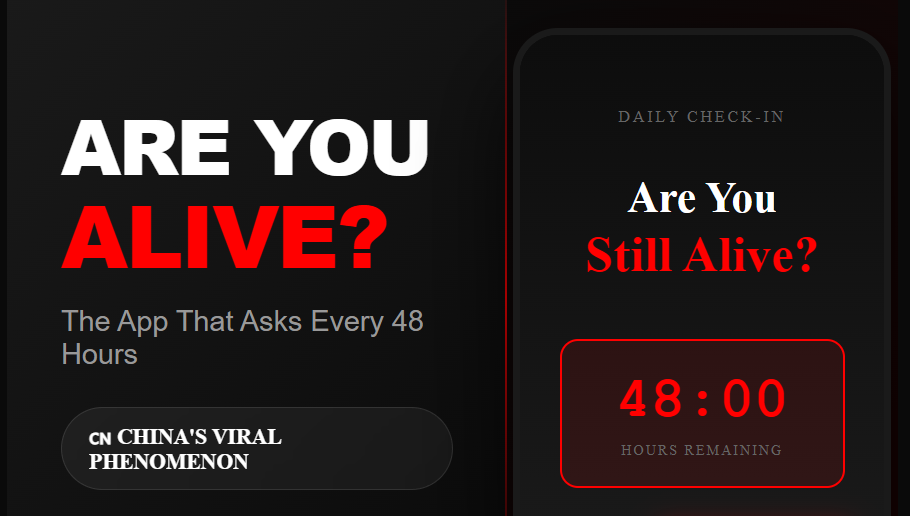
A little-known mobile app from China has unexpectedly become one of the most talked-about digital trends of the year. Unlike social media platforms or mobile games, this app focuses on a single purpose – confirming that its users are still alive. The app’s unusual concept and emotional impact have helped it spread rapidly, especially among people living alone in urban areas.
The app works on a simple check-in system. Once every two days, users are expected to open the app and tap a confirmation button. If the check-in is completed, nothing further happens. If it is missed, the app sends an alert to a selected emergency contact. This design removes the need for constant interaction while still ensuring that prolonged silence does not go unnoticed.
Its popularity reflects changing social patterns in China. As cities grow and lifestyles become more individualistic, many people now live far from family and traditional support systems. Marriage is increasingly delayed, work hours are long, and social interaction is limited. By 2030, China is expected to have nearly 200 million single-person households, making concerns about isolation more common than ever.
User reactions on social media show that the app resonates on an emotional level. Many users describe it as comforting, while others admit it provides reassurance that someone will be notified in case of an emergency. Despite criticism over its name – which some consider culturally inappropriate – the app continues to gain users, suggesting that its message addresses a real and growing concern.
From a practical standpoint, the app can be useful in medical emergencies, accidents, or mental health situations. However, critics argue that it does not address the root cause of loneliness. Instead, it acts as a safety mechanism in a society where many people feel invisible.
Ultimately, the app’s success is not about technology alone. It highlights a deeper social reality -modern life has made independence easier, but connection harder. The app’s central question resonates because it reflects a fear shared by millions: if something happens, will anyone know?
Loading newsletter form...