VPN Obfuscation Technology – Defeating DPI Inspection
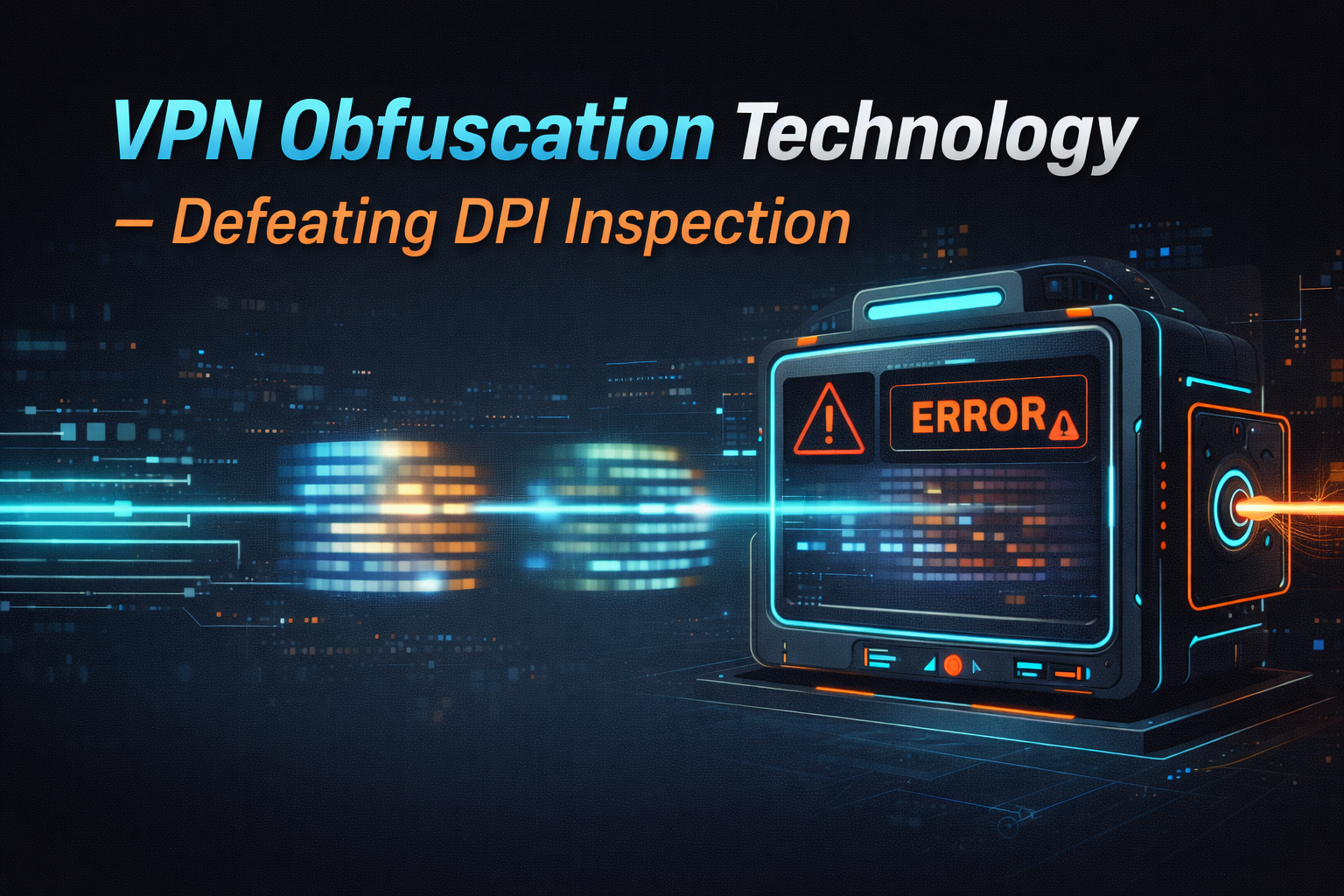
Government firewalls and corporate networks don’t need to crack your encryption to block VPN connections. Deep packet inspection (DPI) systems identify VPN traffic through protocol signatures, packet patterns, and timing characteristics – then simply drop those connections.
VPN obfuscation solves this problem by disguising encrypted VPN traffic as ordinary HTTPS web browsing. This stealth layer wraps your VPN connection in camouflage that passes through DPI filters undetected, maintaining access even in restrictive environments where standard VPN protocols are blocked.
What is Deep Packet Inspection
Deep packet inspection analyzes the content and characteristics of network traffic beyond basic routing information. Unlike simple packet filtering that examines only headers, DPI inspects the entire packet including the payload data.
Network administrators use DPI to categorize traffic, enforce policies, and detect security threats. The technology examines packet structure, timing patterns, and content signatures to identify protocols and applications.
Standard packet inspection checks source addresses, destination addresses, and port numbers. This provides basic routing and firewall functionality without examining actual data contents.
DPI goes deeper by analyzing the application layer protocol, inspecting packet payloads for specific patterns, examining timing and size characteristics, and identifying encrypted traffic types. This comprehensive analysis enables sophisticated traffic management and filtering.
How DPI Identifies VPN Traffic
VPN protocols contain distinctive signatures that DPI systems recognize easily. Each protocol advertises itself through specific header structures and handshake patterns.
OpenVPN connections typically use port 1194 and contain identifiable protocol markers in packet headers. Most VPN protocols, like OpenVPN and WireGuard, openly signal that they are encrypting traffic by advertising the protocol in the packet header.
WireGuard uses a distinctive handshake pattern that DPI can fingerprint. The protocol’s efficiency creates recognizable packet size and timing characteristics.
IKEv2/IPsec exchanges specific message types during connection establishment. These standardized messages create signatures that DPI systems catalog and match against traffic flows.
Basic DPI uses protocol analysis to augment these techniques. VPN protocols such as OpenVPN and WireGuard have fields in their packet headers that are unique to those protocols, so identifying them via DPI allows an ISP to block them immediately.
Advanced DPI Detection Methods
Modern DPI engines run JA3 hashes to match your VPN’s TLS handshake. They check your ciphers, TLS extensions, and the order they appear. This fingerprinting technique identifies connections even when standard ports change.
Packet size analysis reveals VPN traffic through uniform or predictable patterns. Regular web browsing produces varied packet sizes, while VPN tunnels often show more consistent characteristics.
Timing analysis examines connection patterns and data flow rhythms. VPN connections maintain persistent tunnels that behave differently from typical web requests.
Statistical analysis accumulates data over time to identify encrypted tunnels. Even when individual packets appear legitimate, aggregate behavior patterns expose VPN usage.
Understanding VPN Obfuscation
VPN obfuscation disguises VPN traffic to make it indistinguishable from regular HTTPS connections. This camouflage layer prevents DPI systems from identifying and blocking VPN protocols.
Obfuscation is the act of hiding the fact that you’re using a VPN at all. What they do is wrap your encrypted VPN traffic in a second layer of encryption designed to look like regular HTTPS traffic.
The obfuscation process adds no additional security to the encrypted VPN tunnel itself. Instead, it provides a disguise that allows the encrypted tunnel to pass through inspection systems designed to block it.
Standard encryption protects data confidentiality. Obfuscation protects connection availability by preventing detection and blocking.
Obfuscation vs Standard Encryption
Standard VPN encryption secures your data but announces its presence through protocol signatures. Anyone monitoring the network can see you’re using a VPN, even if they can’t read the encrypted content.
Obfuscation adds a second layer that conceals the VPN protocol itself. By wrapping your VPN data in an extra layer of stealth, obfuscation essentially makes your traffic invisible to the systems trying to block it.
This distinction matters in environments where VPN usage itself triggers blocking. Countries with internet censorship and corporate networks with strict policies often block all identified VPN traffic regardless of content.
Think of encryption as a locked safe – secure but obviously present. Obfuscation disguises that safe to look like ordinary furniture, hiding its existence from casual inspection.
Common Obfuscation Techniques
Protocol encapsulation wraps VPN traffic inside another protocol. The most common method is encapsulation, where VPN traffic is hidden within another protocol like HTTPS. This disguises VPN traffic by making it appear as regular encrypted web browsing.
Handshake randomization changes the distinctive patterns that DPI systems fingerprint. PureVPN’s stealth mode changes the order and details in every handshake. This constant morphing makes fingerprinting far harder.
Port randomization prevents blocking based on standard VPN ports. Dynamic port selection breaks the predictable patterns that simple DPI filters catch.
Packet padding and timing adjustments modify traffic characteristics to match normal web browsing patterns. This defeats statistical analysis that identifies VPN traffic through behavioral signatures.
How Obfuscation Technologies Work
Different obfuscation implementations use varying technical approaches. Understanding these methods helps you evaluate provider claims and select appropriate solutions.
Stunnel and SSL/TLS Wrapping
Stunnel wraps VPN connections inside SSL/TLS encryption tunnels. This creates the appearance of standard HTTPS traffic to port 443, which most networks allow.
The SSL/TLS wrapper adds encryption that already exists in the VPN tunnel. While redundant for security, this double-encryption serves an important purpose – disguise.
DPI systems see the outer SSL/TLS layer and classify traffic as HTTPS web browsing. They can’t examine the VPN protocol hidden inside the encrypted wrapper.
Configuration requires running Stunnel on both client and server. The additional software layer adds some performance overhead but provides effective obfuscation.
Obfsproxy and Tor Integration
Obfsproxy was originally developed for the Tor network to defeat censorship. It disguises traffic by transforming it into random-looking data that lacks identifying characteristics.
The obfs4 protocol is the current standard, providing strong obfuscation through polymorphic encryption. Each connection appears unique, preventing fingerprinting through pattern matching.
Obfsproxy plugs into VPN software through SOCKS proxy interfaces. This modular approach allows integration with OpenVPN and other protocols without modifying core VPN code.
Performance impact varies based on the obfuscation mode selected. Stronger obfuscation requires more processing but provides better protection against sophisticated DPI systems.
Shadowsocks Protocol
Shadowsocks was specifically designed to circumvent China’s Great Firewall. It creates encrypted SOCKS5 proxy connections that resist identification through DPI.
The protocol uses stream ciphers to encrypt data, producing output that appears random. Without distinctive headers or handshakes, DPI systems can’t reliably identify Shadowsocks traffic.
Lightweight implementation provides better performance than traditional VPN protocols. This makes Shadowsocks particularly effective for users in regions with slow internet connections.
The protocol supports multiple encryption ciphers and constantly evolves to stay ahead of detection methods. Active development continues to improve censorship resistance.
Proprietary Obfuscation Protocols
Major VPN providers develop custom obfuscation protocols tailored to specific blocking scenarios. These proprietary solutions combine multiple techniques for stronger protection.
This new protocol combines various open-source technologies, most notably using obfuscated TLS tunneling over TCP to look like HTTPS in a more censorship-resistant way than simply running VPN over TCP port 443.
NordVPN’s obfuscated servers modify OpenVPN traffic to remove identifying signatures. ExpressVPN uses proprietary obfuscation in their Lightway protocol.
Custom protocols allow rapid adaptation when blocking methods evolve. Providers can update obfuscation techniques without waiting for open-source protocol development.
The trade-off is reduced transparency compared to open-source solutions. Users must trust providers to implement obfuscation correctly without introducing vulnerabilities.
Real-World Applications and Limitations
Obfuscation works best in specific scenarios and faces limitations in others. Understanding these contexts helps set realistic expectations.
Defeating Government Censorship
Internet censorship systems in China, Iran, Russia, and other countries actively block VPN traffic. Stealth has helped millions of people overcome VPN blocks in places such as Iran and Russia, but we can’t guarantee its effectiveness against advanced DPI techniques.
Obfuscated VPN connections maintain access to blocked websites and services. Users can bypass censorship filters that would otherwise prevent VPN usage entirely.
The effectiveness varies based on the sophistication of censorship infrastructure. Simple protocol blocking is easily defeated, while advanced behavioral analysis requires stronger obfuscation.
We’re locked in an arms race with some of the globe’s most repressive governments, and the stakes could not be higher. Censorship technology continuously evolves, requiring ongoing obfuscation improvements.
Bypassing Corporate Restrictions
Companies often block VPN usage to enforce acceptable use policies and prevent data exfiltration. Obfuscation enables employees to maintain privacy while complying with security requirements.
Corporate DPI systems typically use commercial solutions less sophisticated than government censorship. Standard obfuscation techniques successfully bypass most corporate filters.
However, using obfuscated VPNs against employer policies may violate employment agreements. Technical capability doesn’t imply authorization or appropriateness.
Some organizations whitelist only specific applications and protocols. In these locked-down environments, even obfuscated traffic may be blocked by default-deny policies.
Circumventing ISP Throttling
Internet service providers use DPI to identify and throttle specific traffic types. VPN usage itself sometimes triggers throttling when ISPs want to manage bandwidth or enforce data caps.
Obfuscated VPN connections appear as regular HTTPS traffic, preventing ISPs from applying VPN-specific throttling. This maintains normal speeds without revealing VPN usage.
VPN obfuscation presents a significant challenge for deep packet inspection (DPI) systems. This technique disguises VPN traffic, making it appear as regular HTTPS traffic to evade detection.
Net neutrality violations often involve throttling specific services while allowing others. Obfuscation prevents ISPs from discriminating based on traffic classification.
The effectiveness depends on how ISPs implement throttling. Encrypted traffic in general may still face limitations regardless of whether it’s identified as VPN.
Performance Considerations
Obfuscation adds processing overhead that can reduce connection speeds. The additional encryption layer and protocol transformation require computational resources.
The performance impact varies from negligible to significant based on the obfuscation method. Simple SSL/TLS wrapping adds minimal overhead, while complex polymorphic obfuscation requires more processing.
Mobile devices with limited processing power may experience more noticeable slowdowns. Battery consumption also increases with additional encryption and protocol manipulation.
Most modern devices handle obfuscation overhead well during typical use. You’ll likely notice delays more during initial connection than during data transfer.
Configuring Obfuscation
Implementation complexity ranges from one-click solutions to manual configuration. Understanding your options helps you choose the appropriate approach.
Provider-Managed Solutions
Most commercial VPN services offer built-in obfuscation features. These implementations require minimal technical knowledge and work automatically.
NordVPN provides dedicated obfuscated servers that activate stealth mode when selected. The VPN client handles all configuration without user intervention.
ExpressVPN’s automatic obfuscation activates when it detects VPN blocking. This adaptive approach balances performance with censorship resistance.
Surfshark’s Camouflage mode disguises VPN traffic through the NoBorders feature. Users simply toggle the option in client settings.
Provider-managed solutions offer convenience but limit customization. You can’t modify obfuscation parameters or select specific techniques.
Manual OpenVPN Configuration
Advanced users can configure OpenVPN with obfuscation plugins for complete control. This approach requires technical knowledge but provides maximum flexibility.
The scramble patch modifies OpenVPN to obfuscate packets before transmission. Configuration files specify scrambling passwords that both client and server must share.
Obfsproxy integration requires installing the plugin and modifying OpenVPN configuration files. The SOCKS proxy settings direct traffic through obfsproxy before the VPN connection.
Stunnel configuration creates SSL/TLS tunnels that wrap OpenVPN connections. Both client and server require Stunnel installation and matching configuration files.
Manual configuration demands understanding of network protocols and troubleshooting skills. Errors in configuration files prevent connections or break obfuscation.
Protocol Selection Strategy
Choose protocols based on your specific blocking scenario and performance requirements. Not all situations require obfuscation.
OpenVPN with obfuscation provides strong security and effective stealth but has moderate performance. This combination works well for censored regions with strict DPI.
WireGuard offers excellent performance but limited native obfuscation options. Third-party wrappers can add stealth at the cost of WireGuard’s simplicity.
Shadowsocks prioritizes censorship resistance over VPN features. Use it when VPN protocols are completely blocked but you need basic proxy functionality.
Understanding VPN protocol differences helps you select appropriate base protocols before adding obfuscation.
Layer obfuscation only when needed. Unnecessary stealth adds overhead without benefit when VPN traffic isn’t blocked.
Evaluating Obfuscation Effectiveness
Not all obfuscation implementations work equally well. Testing and evaluation help verify protection against specific DPI systems.
Testing Against DPI Systems
Test your VPN connection from the network where you need obfuscation. What works against one DPI system may fail against another.
Connection success indicates the obfuscation bypassed protocol blocking. However, this doesn’t confirm complete stealth – the DPI system might allow VPN traffic.
Packet capture tools like Wireshark show what your traffic looks like to network observers. Examine captured packets for identifying VPN signatures.
Compare obfuscated traffic against regular HTTPS connections. Look for differences in packet sizes, timing patterns, or protocol signatures that could enable detection.
Third-party testing services can analyze your connection for leaks and identifying characteristics. These tools simulate DPI inspection to verify obfuscation effectiveness.
Common Obfuscation Failures
Static port usage defeats obfuscation when DPI systems maintain VPN server IP blacklists. A static port like OpenVPN’s 1194 is basically a flag waving “I’m a VPN tunnel.” If you never rotate ports, firewalls can block you with one rule.
Predictable handshake patterns allow fingerprinting even when protocols are wrapped. Most cheap VPN setups fail because their handshake looks exactly the same every time. DPI tools catch that fast.
Packet size uniformity creates behavioral signatures that statistical analysis detects. Normal web browsing shows varied packet sizes while poorly obfuscated VPN traffic maintains predictable patterns.
Timing characteristics expose VPN tunnels through persistent connections and constant keepalive packets. Regular HTTPS sessions behave differently than maintained VPN tunnels.
Certificate inspection can identify VPN servers when certificates contain identifying information or match known VPN provider patterns.
Provider Transparency and Audits
Verify provider claims about obfuscation through published technical documentation. Marketing materials rarely contain sufficient implementation details.
Independent security audits validate obfuscation effectiveness when they include censorship resistance testing. Few audits examine stealth features as thoroughly as encryption.
Community testing in censored regions provides real-world effectiveness data. User reports from China, Iran, and Russia indicate which solutions actually work.
Open-source obfuscation tools allow independent verification through code review. Proprietary protocols require trusting provider claims without verification.
Regular updates indicate active development to counter evolving DPI techniques. Stagnant obfuscation implementations become ineffective as blocking methods improve.
Beyond Basic Obfuscation
Advanced techniques combine multiple strategies for stronger protection. Understanding these approaches helps you evaluate sophisticated solutions.
Domain Fronting
Domain fronting hides the actual destination server behind legitimate CDN traffic. Requests appear directed at major websites like Amazon or Google while actually reaching VPN servers.
The technique exploits how CDNs route traffic based on HTTP headers rather than TLS SNI. This allows connections to VPN servers that appear to visit popular, unblocked websites.
Major cloud providers have closed loopholes that enabled domain fronting. The technique is less reliable than in previous years but still works with some CDNs.
Implementation requires cooperation from VPN providers and appropriate server infrastructure. Individual users cannot simply enable domain fronting through client settings.
Multi-Hop Connections
Routing traffic through multiple VPN servers before reaching the destination makes blocking more difficult. Each hop appears as a separate encrypted connection to different endpoints.
DPI systems would need to block every intermediate server to prevent the connection. This becomes impractical when VPN providers rotate server IPs frequently.
Multiple hops multiply latency and reduce speeds proportionally. Each additional server adds processing delays and routing overhead.
The security benefit is limited since the final exit node sees your unencrypted traffic. Multi-hop helps primarily with obfuscation rather than privacy protection.
Explore advanced VPN security features to understand how multi-hop combines with other protections.
Decoy Traffic Generation
Some advanced systems generate dummy traffic that mimics genuine user behavior. This background noise makes statistical analysis more difficult.
Decoy traffic creates cover patterns that mask the actual VPN connection characteristics. DPI systems see varied traffic that appears like normal browsing.
The technique requires significant bandwidth to be effective. Generating enough decoy traffic to obscure VPN patterns consumes data and processing resources.
Battery drain on mobile devices makes continuous decoy generation impractical for most users. The technique works better on always-connected desktop systems.
Protocol Hopping
Dynamic protocol switching changes VPN protocols during active sessions. This defeats DPI systems that fingerprint specific protocols.
The VPN client and server negotiate protocol changes automatically when detecting blocking attempts. Seamless transitions maintain connection continuity.
Implementation complexity limits availability to providers with custom VPN software. Standard protocols don’t support runtime protocol switching.
The approach requires fallback protocols when primary options are blocked. This typically means OpenVPN with obfuscation serves as the final fallback option.
Selecting Obfuscation-Capable VPNs
Not all VPN providers offer effective obfuscation. Evaluation criteria help identify capable services.
Key Features to Look For
Dedicated obfuscated servers indicate purpose-built infrastructure for censorship resistance. These specialized servers optimize for stealth rather than just speed.
Multiple obfuscation protocols provide options when one method fails. Providers offering both Stunnel and Shadowsocks demonstrate commitment to censorship resistance.
Automatic obfuscation detection activates stealth mode when needed without manual configuration. This adaptive approach balances performance with blocking resistance.
Regular protocol updates show active development to counter evolving DPI techniques. Check provider changelogs for obfuscation improvements and new stealth features.
Transparent documentation explaining obfuscation implementation builds trust. Providers should specify which techniques they use and how they work.
Testing and Verification
Trial periods or money-back guarantees allow testing from your actual location. Obfuscation effectiveness varies by region and network.
Connection success from censored regions provides the ultimate proof. Community reports from China and Iran indicate real-world performance.
Customer support knowledge about obfuscation suggests proper implementation. Representatives should understand technical details and troubleshooting steps.
Independent reviews focused on censorship resistance offer valuable insights. Generic VPN reviews rarely test obfuscation thoroughly.
Regional Effectiveness
Obfuscation that works in corporate networks may fail against national censorship systems. China’s Great Firewall represents the most sophisticated blocking technology.
Provider servers in regions near censored countries reduce latency. Connecting to distant servers increases delays that make obfuscated connections less practical.
Regular server IP rotation prevents blacklisting. DPI systems that can’t identify VPN protocols often maintain lists of known VPN server addresses.
Fallback servers provide alternatives when primary obfuscated servers are blocked. Distributed infrastructure improves reliability when blocking escalates.
Privacy and Security Implications
Obfuscation introduces considerations beyond simple VPN usage. Understanding these factors helps you make informed decisions.
Trust Requirements
Obfuscation often requires additional software beyond the VPN client. Stunnel, Obfsproxy, and proprietary obfuscation tools expand your trust boundary.
Proxy layers create additional points where traffic could be monitored or manipulated. Ensure obfuscation software comes from trustworthy sources.
Provider-managed obfuscation centralizes control with the VPN company. You must trust their implementation doesn’t compromise security or privacy.
Open-source obfuscation tools allow independent security audits. Community review reduces the risk of backdoors or vulnerabilities.
Performance Trade-Offs
Additional encryption layers increase computational overhead. Mobile devices with limited processors may experience noticeable slowdowns.
Latency increases with each obfuscation wrapper and protocol transformation. Real-time applications like gaming or video calls feel this impact more.
Bandwidth overhead from packet encapsulation and padding reduces effective throughput. Your connection speed decreases even when the VPN itself performs well.
Battery consumption rises with increased processing requirements. Enable obfuscation only when needed to preserve mobile device battery life.
Logging Considerations
Obfuscation servers may log differently than standard VPN servers. Verify provider logging policies apply consistently across obfuscated infrastructure.
Proxy layers between you and the VPN could theoretically log connections. Ensure the obfuscation mechanism itself doesn’t create logging vulnerabilities.
Some obfuscation techniques require server-side configuration unique to your account. This potentially creates identifiable patterns even with no-logs policies.
Independent audits should examine obfuscated server infrastructure specifically. Logging audits focused only on standard VPN servers may miss obfuscation logging.
Conclusion
VPN obfuscation transforms blocked connections into working ones by disguising protocol signatures that DPI systems detect. This stealth layer doesn’t improve encryption strength but solves the practical problem of connection availability in restricted environments.
Effectiveness depends on implementation quality and the sophistication of blocking systems. Simple SSL/TLS wrapping defeats basic DPI, while advanced censorship requires specialized techniques like Shadowsocks or proprietary obfuscation protocols.
Choose obfuscation based on your actual needs rather than perceived security benefits. Performance overhead makes it unnecessary when VPN traffic isn’t blocked, but essential when facing active censorship or corporate restrictions.
The ongoing evolution of DPI technology means obfuscation techniques must continuously adapt. Select VPN providers that actively develop and update their obfuscation capabilities rather than relying on static implementations.
FAQs
Q: What is VPN obfuscation and why do I need it?
A: VPN obfuscation disguises VPN traffic as regular HTTPS browsing to bypass deep packet inspection systems that detect and block VPN protocols.
Q: Does obfuscation make my VPN slower?
A: Yes, obfuscation adds processing overhead that typically reduces speeds by 10-30% depending on the method used, though the impact is often negligible for normal browsing.
Q: Can obfuscation defeat China’s Great Firewall?
A: Well-implemented obfuscation can bypass Chinese censorship, but effectiveness varies as blocking technology constantly evolves and no solution works 100% of the time.
Q: Is obfuscated VPN traffic legal?
A: VPN legality varies by country, and obfuscation doesn’t change legal status – if VPNs are legal in your location, obfuscated VPNs typically are too.
Q: How do I know if my VPN obfuscation is working?
A: Test by connecting from a network that blocks standard VPN traffic, or use packet capture tools to verify your traffic appears as regular HTTPS without VPN protocol signatures.
Loading newsletter form...